
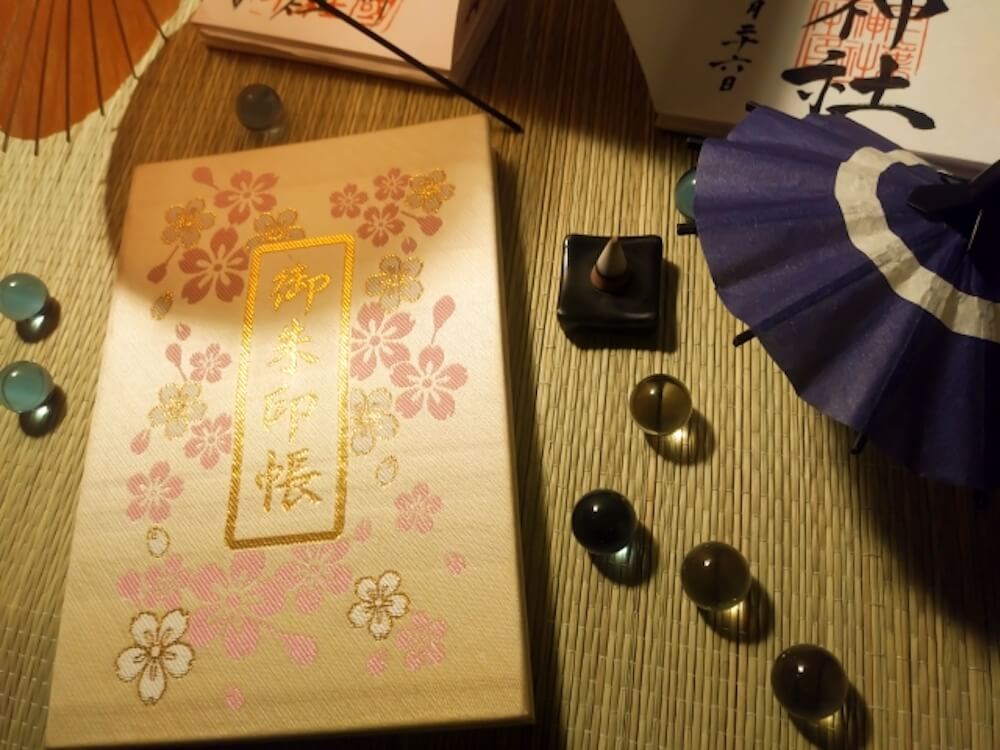
What Is a Goshuin? A Clear Guide to Its Meaning, Significance, How to Receive One, and Important Etiquette
In recent years, collecting Goshuin (temple stamp) has become increasingly popular, especially among young women, with more people visiting temples and shrines specifically to receive them.
A Goshuin is a seal impression granted at a temple or shrine as proof of worship. In this article, we thoroughly explain the meaning, significance, how to receive one, and the essential basics of Goshuin.

What Is a Goshuin?
A Goshuin is a “record of your spiritual connection with the deities and Buddhas,” received at temples and shrines as proof of worship. It typically consists of a red seal and handwritten ink inscriptions including the date of worship and the name of the temple or shrine.
Originally, Goshuin were granted as proof that a handwritten sutra (shakyo) had been offered. Today, however, even without offering a sutra, visitors can receive a Goshuin as a mark of worship for a small fee of several hundred yen.
What Is the Original Meaning of a Goshuin?

As mentioned above, the original meaning of a Goshuin was to serve as proof that a sutra had been copied and dedicated.
Today, many people casually visit temples and shrines while sightseeing and receive Goshuin for a small fee. However, in the past, they were not so easily obtained.
Originally, the main meaning of a Goshuin was connected to making heartfelt prayers. It was not enough simply to place one’s hands together in prayer before the gods or Buddhas; one was expected to dedicate a copied sutra, which was believed to strongly help fulfill one’s wishes.
Shakyo (sutra copying) has traditionally been practiced for the preservation of Buddhist scriptures, memorial services for ancestors, fulfillment of prayers, and spiritual stability. Copying a sutra is also considered equivalent to chanting it. Receiving a Goshuin was originally proof that such a dedication had been made.
Why Do People Collect Goshuin??
There are many reasons people collect Goshuin: making prayers, recording travels, preserving memories, collecting rare designs as a hobby, and more.
The original meaning of collecting Goshuin is to record one’s act of worship. By visiting temples and shrines and receiving Goshuin as proof, people deepen their spiritual connection and preserve that connection in written form.

Today, however, more people collect Goshuin in their Goshuincho (seal book) because of seasonal limited designs and their artistic beauty.
Especially during the COVID-19 pandemic, when many people were unable to travel or visit temples and shrines in person, more temples began offering Goshuin through online sales and postal delivery services. This allowed people to continue enjoying Goshuin collecting even when travel was restricted.
While the original meaning of collecting Goshuin has evolved somewhat over time, the spread of online services has made it possible to receive Goshuin from distant temples and shrines as well.
Do Goshuin Have Spiritual Effects?
A Goshuin is not something granted for good fortune or direct spiritual benefits. Its original meaning is “proof of worship,” and therefore the Goshuin itself does not inherently possess spiritual power.
It is best to preserve it carefully as a record of worship, a travel memory, or part of a personal collection.
What Should You Do After Collecting Goshuin?
There are no strict rules regarding storage, but since a Goshuin is a “record of your connection with the deities and Buddhas,” it should be treated with respect and kept carefully.
Looking back at your Goshuin as a record of your travels and spiritual encounters can become one of the joys of collecting them.
If you need to dispose of your Goshuincho, you should ask a temple or shrine to perform a ritual burning (otakiage). Normally, this is done at the temple where you received the Goshuin, but if that is difficult due to distance, you may inquire at a nearby temple. Some temples also accept Goshuincho by mail for this purpose.
Types of Goshuin and Their Meanings

What Is the Difference Between Shrine and Temple Goshuin?
There is no clear distinction in meaning between Goshuin from shrines and those from temples. Both represent proof of worship and a record of your connection with that sacred place.
Each Goshuin is handwritten, so the style and design vary depending on the temple or shrine, giving each one unique characteristics.
Generally, a Goshuin includes a red seal along with the name of the shrine or temple and the name of the deity or Buddha written in ink.
Special Goshuin
Goshuin vary widely depending on the temple or shrine. Some temples offer multiple types, and many shrines and temples provide seasonal limited Goshuin.
Seasonal Goshuin that can only be received during a specific time of year are especially popular. Many people visit temples and shrines specifically to receive them, and some also purchase them online.

At Jyoraku-ji Temple in Chichibu City, Saitama Prefecture, special Goshuin are prepared each month with changing designs, and they are also available by postal delivery. On Dragon Days, inscriptions can be written in gold ink, and visitors may choose phrases such as “financial prosperity” or “good fortune and protection from misfortune.”
View this month’s special Goshuin from Jyoraku-ji Temple
How to Receive a Goshuin and Proper Etiquette

Basic Procedure and Important Points
Since a Goshuin is proof of worship, you should first complete your prayers before the deity or Buddha. Afterward, go to the temple office (nokyosho) to receive your Goshuin.
While waiting, refrain from private conversations and wait quietly. It is considered improper to request specific writing styles. Each Goshuin is carefully handwritten, so appreciate the individuality of each one.

You must bring a Goshuincho (seal book) when receiving a Goshuin. Goshuin are not given on loose paper or in ordinary notebooks.
Goshuincho are available in many designs through online shops and at temples and shrines themselves.
With the recent popularity of Goshuin collecting, many original Goshuincho designs have appeared.
Finding a Goshuincho that suits your taste at the temple or shrine you visit can be one of the pleasures of collecting Goshuin.
View Goshuincho from Jyoraku-ji Temple
Conclusion

How was this guide? We have explained the basic knowledge of Goshuin, including their meaning, significance, and how to receive them.
By understanding the true meaning of Goshuin, collecting them may become even more enjoyable.
Not only can they serve as travel memories, but if you are unable to visit a temple or shrine in person, you can also obtain them through online sales or postal services.
By understanding the original meaning of Goshuin and proper etiquette for receiving them, you can fully appreciate this beautiful traditional aspect of Japanese culture.
You can view this month’s special Goshuin from Jyoraku-ji Temple here.